

Six Panels, Two Hundred Hands
A Mural For The People, By The People

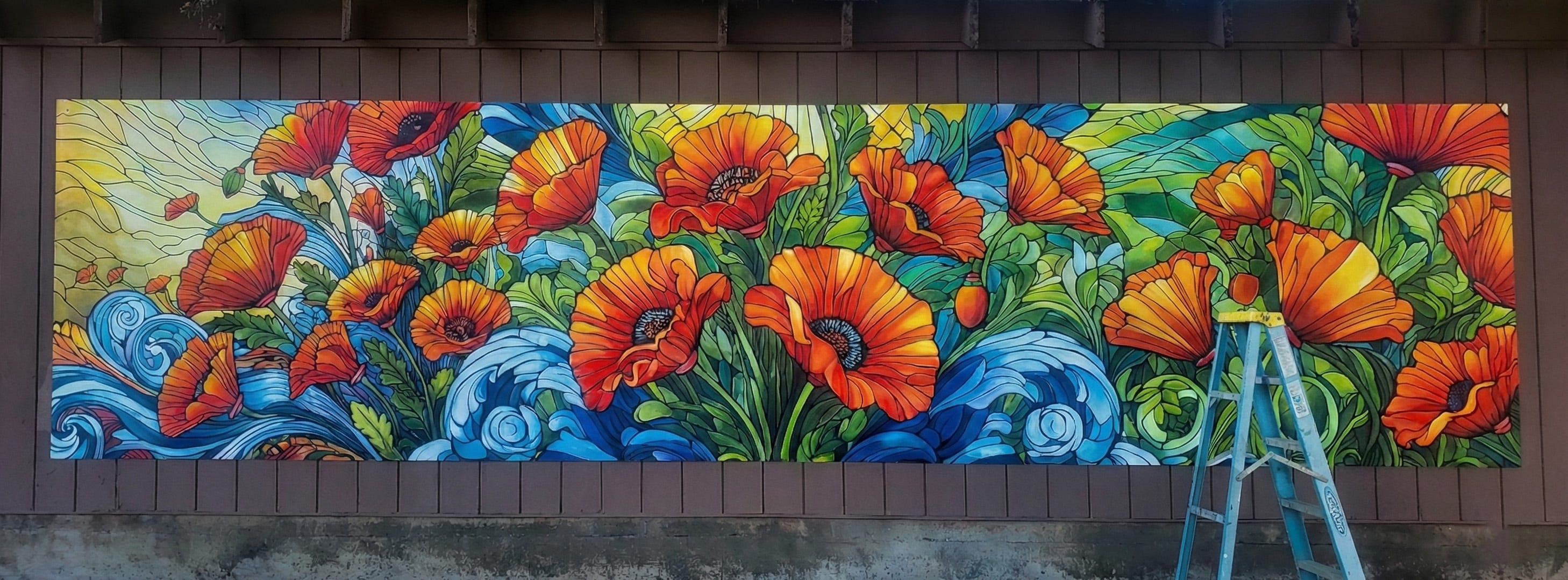
I’ve delayed writing about the poppy mural because I haven’t known how to talk about it. Even now, I can feel myself wanting to stall. Not because there’s nothing to say, but because there’s just so much.
Where do I even start when what I’m trying to describe isn’t just a mural, but an entity with a pulse—a swarm of hands and hearts and conversations? When the image turns into a memory that breathes?
Maybe I just start at the beginning:
With the poppy, and how she claimed me.
Poppy Fever
In early spring, when everything is still half-contracted and the bear cubs are coming out of their dens for the first time, that’s when I start looking for them. Those fringed little leaves, glued flat to the chilly ground. Then the feathery green plumage. The tight buds, waiting. And then one day, suddenly, ORANGE. A scattering of unadulterated jubilance.
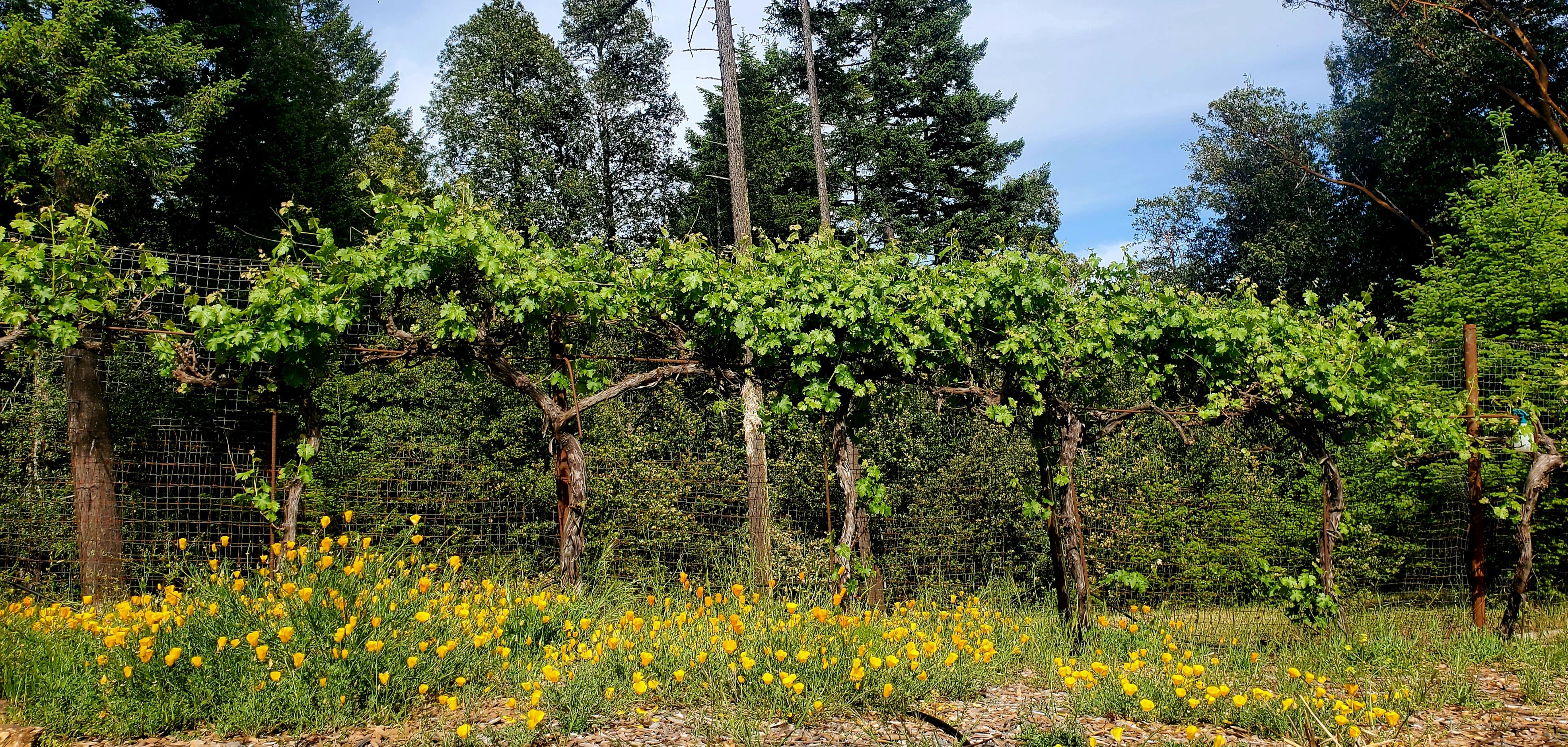
Ah, poppies. With their fat, deep taproots and their faces always maddogging the sun. I just love them—how they come back again and again and open without hesitation, like they’ve never heard of giving up.
Sometime last year, I made a pact with them: if they really went for it and put on a show—really showed me what they were made of—I’d stop plucking them from my walkways and garden beds. They could have their way with the land: Plant their flag between the carrots and tomatoes, shoot up through the gravel and wood chips, make their home beneath the grapevines. I’d even give them extra water when resources allowed.
The Call to Adventure
So, when the city put out a call for a public art piece, my submission was a full-blown love letter to the poppies: an explosion of petals and foliage and sunshine and water. Iconic Mendo, sans cannabis leaves.
When the designs went to a public vote and mine was chosen, something in me clicked into place. Like a lot of people here, my home is at the end of a long dirt road, tucked into the mountains. Going to town is an event. I roll in once a week for groceries, the post office, maybe a coffee, and then disappear back into the trees. I spend so much time painting, gardening, and running my business that my social life is mostly my dog, the checkout clerks, and the lettuce.
So when Willits chose my design, it felt like the town turned to notice me in my cozy little corner, covered in pollen and oil paint, and invited me to come over and play.
Designing Common Ground
From the start, I knew this wasn’t going to be just a painting.
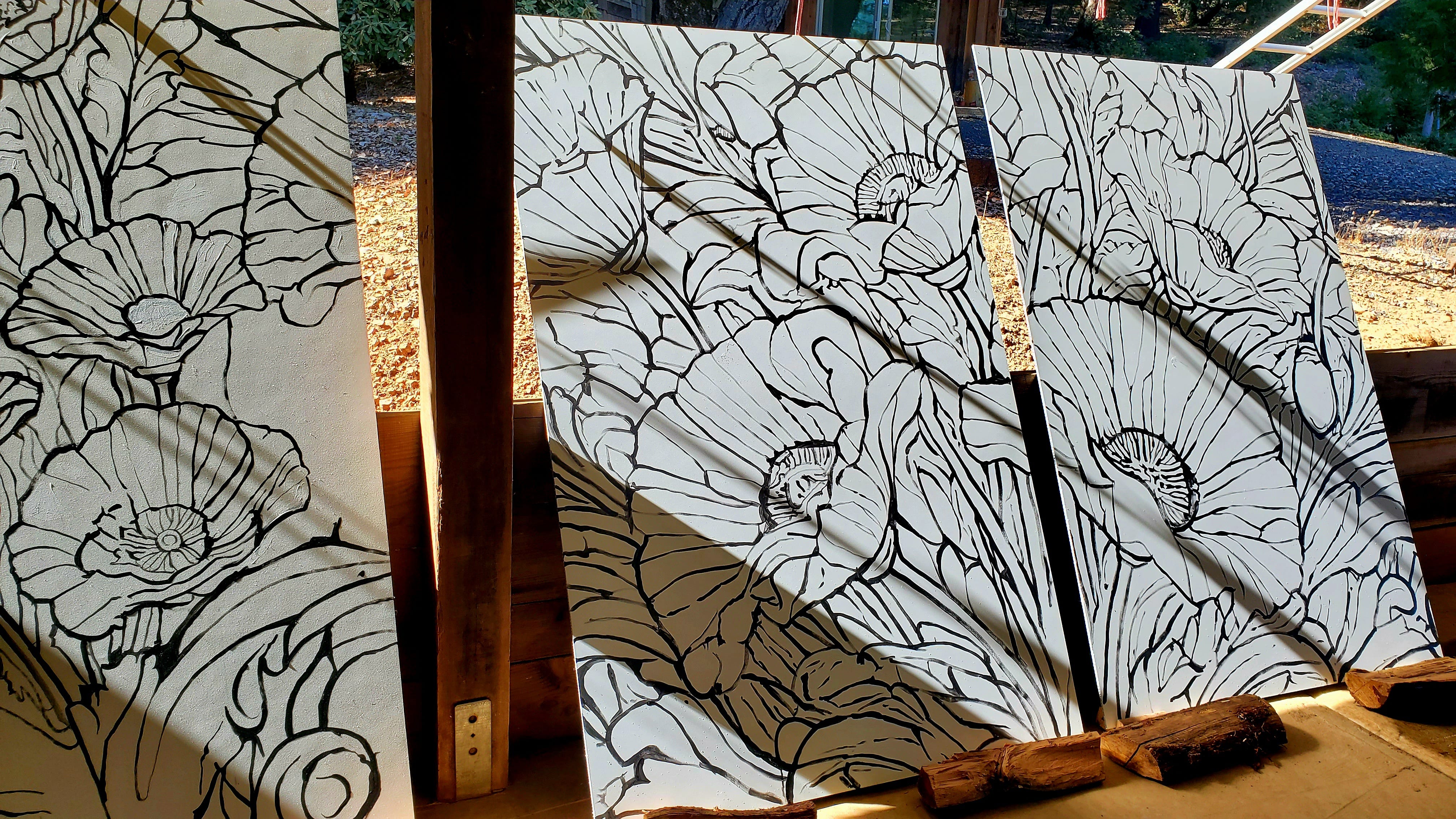
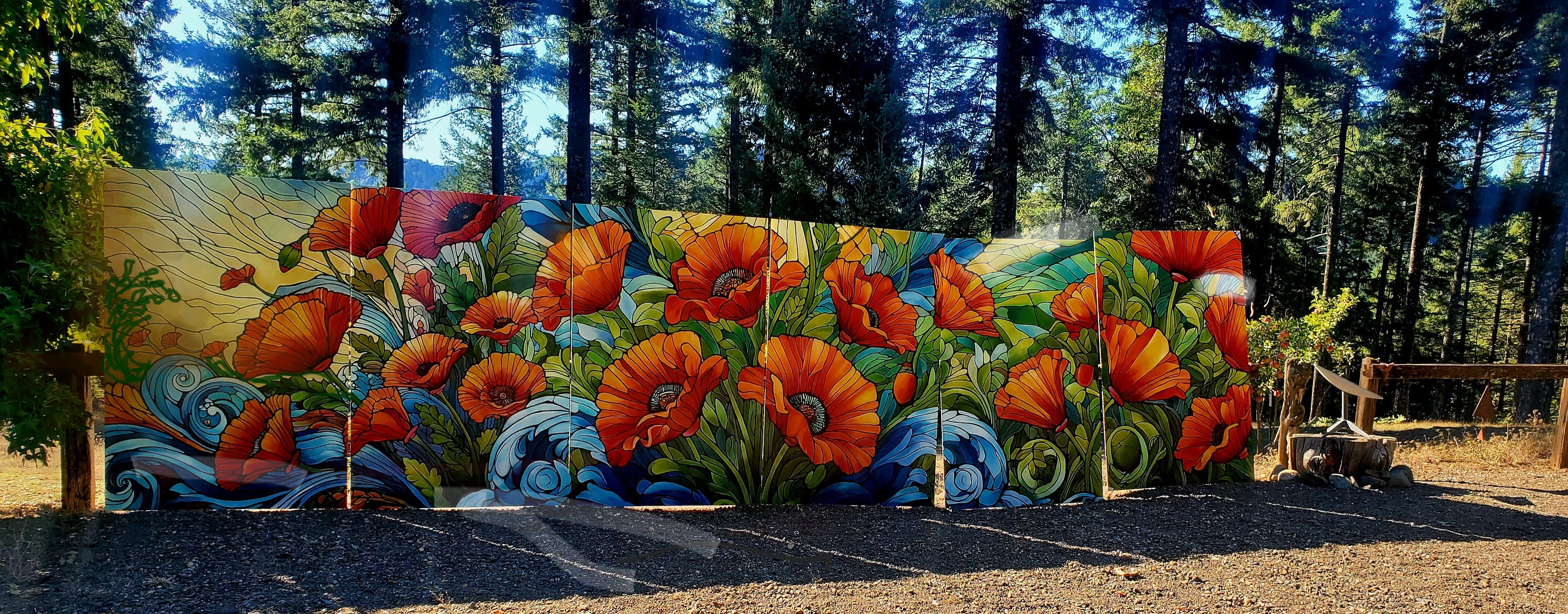
What I wanted to create was an experience—a big, bright collaboration that anyone could step into. So I intentionally designed the mural like a giant stained-glass paint-by-number: thick lines, clear shapes, big color fields. Something a toddler could paint on. Something the “I’m not creative” people could walk up to without having a panic attack.
Originally, I planned to do a few community painting days in a single location. I got everything ready to go. And right as I was about to start, a bout of bureaucratic nonsense reared its ugly head—as bureaucratic nonsense loves to do—and threatened to postpone the project.
The thought of losing it made me weirdly feral.
Because it wasn’t just about me and my project anymore. In my mind, the mural already belonged to the people who hadn’t even painted it yet.
So I fought for it. And with the help of some wonderful humans who actually know how to navigate political landscapes, the mural was uncanceled and given the green light.
But the fight itself changed my vision for the mural. Apparently, if you threaten to take away a project I care about, my response is: Fine, then. I’ll make it bigger.
All it took was one impassioned conversation with Jenn, the artist who had been commissioned to do a mural next to mine. “Like, these are on aluminum panels, right?” I said. “What if I brought the mural to the people instead of asking them to come to the mural?”
The idea was crazy enough for me to desperately love it. (And, of course, Jenn encouraged me, as any good artist friend will do.)
And just like that, this project turned into a mural tour, spread across town. An art sneak attack.
And that’s when everything really started to fall into place, like magic.
I found the perfect aluminum panels to paint the mural on. Turns out Artefex—a world-class fine art company that specializes in aluminum panels—is headquartered right down the street. I mean, what are the chances?
Then, the part I honestly dreaded: organizing the community painting days. (Organization is not my forte.) But I came down off the mountain and actually talked to people, asked for help. And they helped: shared the events, rallied their contacts, opened up their circles.
At some point, I realized I was going to need a lot of help—and of course, by pure chance, I met my ride-or-die assistant, Sarah Brown. Within a week she went from stranger to “I can’t imagine doing this without you.”
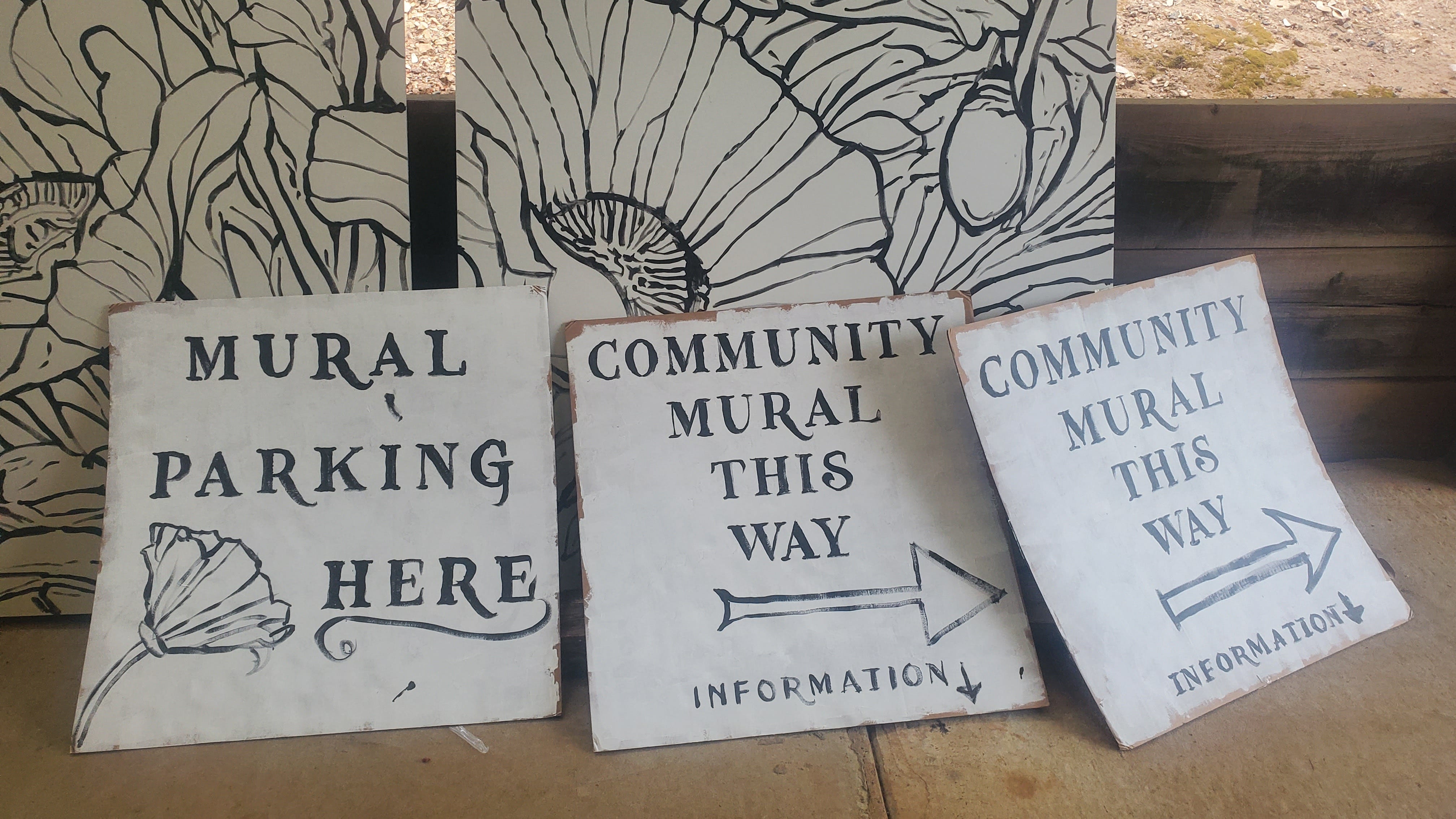
But even with all this magic, the night before the first event I lost count of the butterflies in my stomach. I told Sarah, “It feels like I’m throwing myself a birthday party and don’t know if anyone’s going to show up.” I pictured the six panels elaborately set up in the park, and then me. Just out there, painting alone. And I tried to convince myself it wouldn’t be so bad. I rehearsed the story I’d tell myself if no one came: It’s fine. You love painting alone.
What Actually Happened
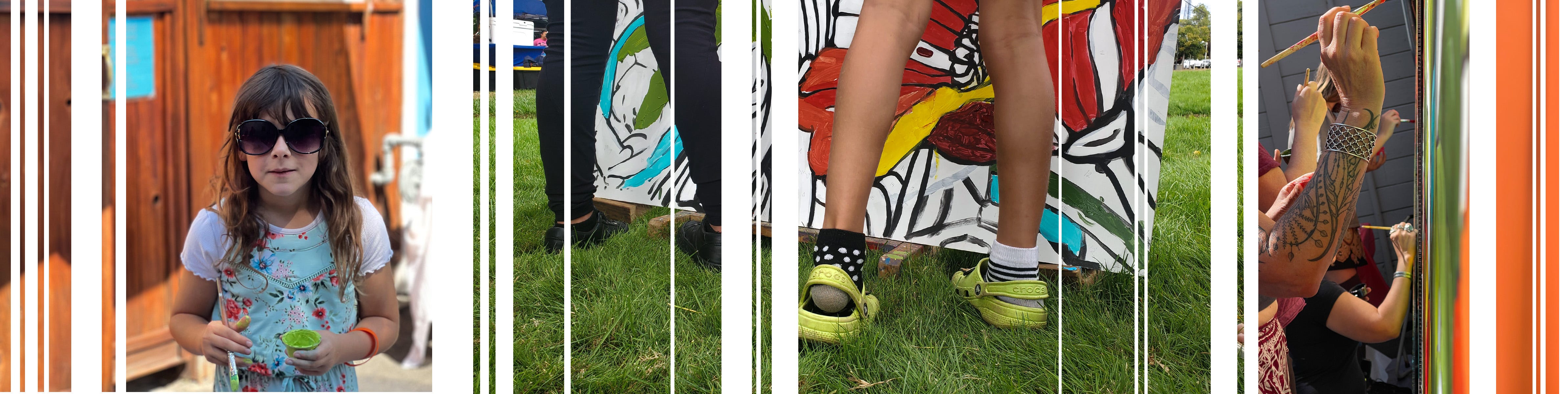
People showed up. Over the course of those days, nearly two hundred of them.
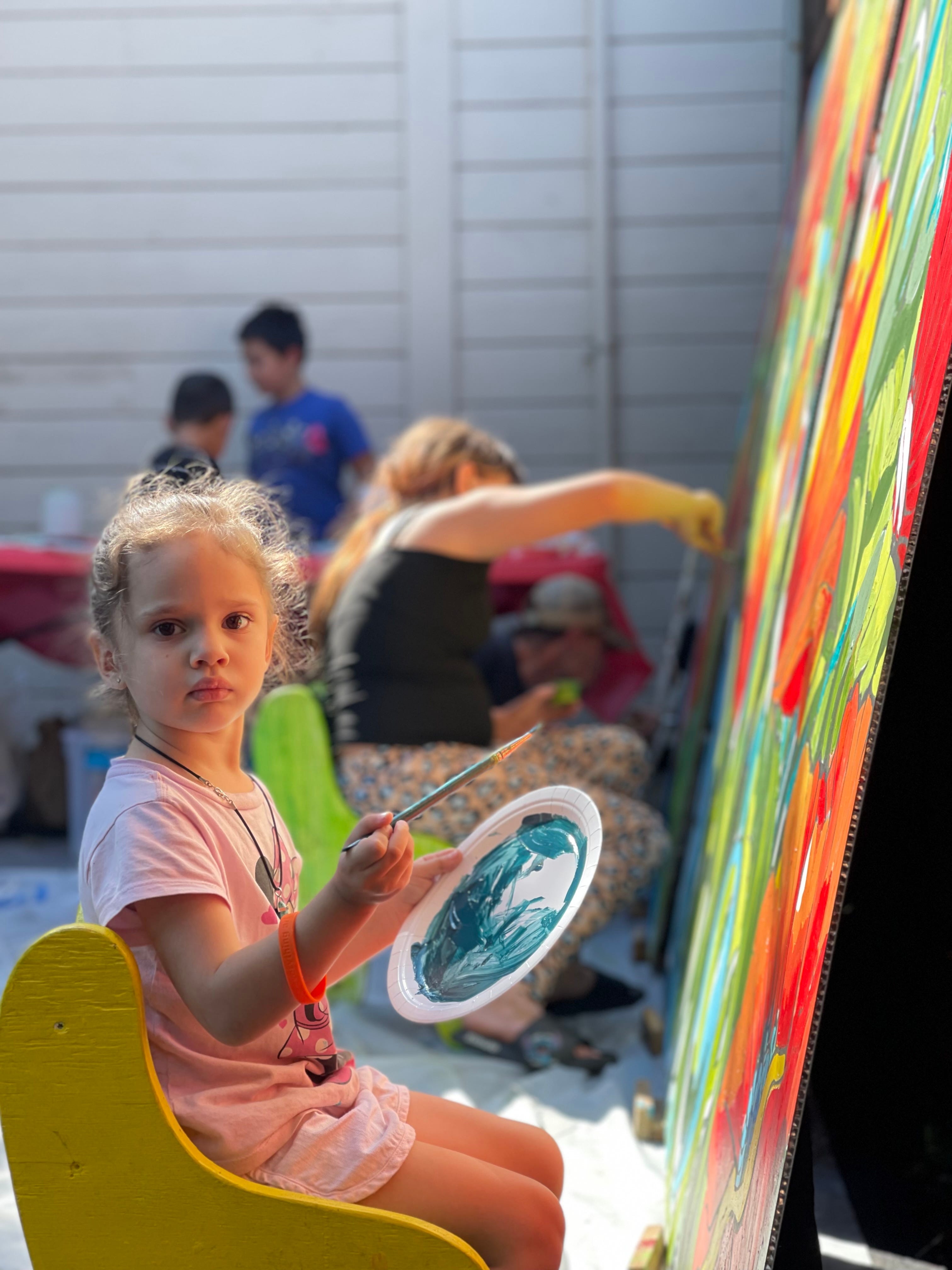
Parents handed brushes to their kids and then quietly picked up their own. Kids painted with wild, guileless abandon that was frankly inspiring. Some painted one petal at a time with tiny brushes. Others looked for the largest brush they could find and laid down color like it was their job to finish the whole thing.
People who had never met shared ramekins of paint, passing them back and forth like bread. More than once, I watched strangers start in silence on the same panel and end up immersed in deep conversation.
The wall turned into a temporary commons. No one had to justify why they were there. The invitation was simple:
Here’s a color.
Here’s a shape.
Do you want to leave a trace of yourself on something that belongs to everyone?
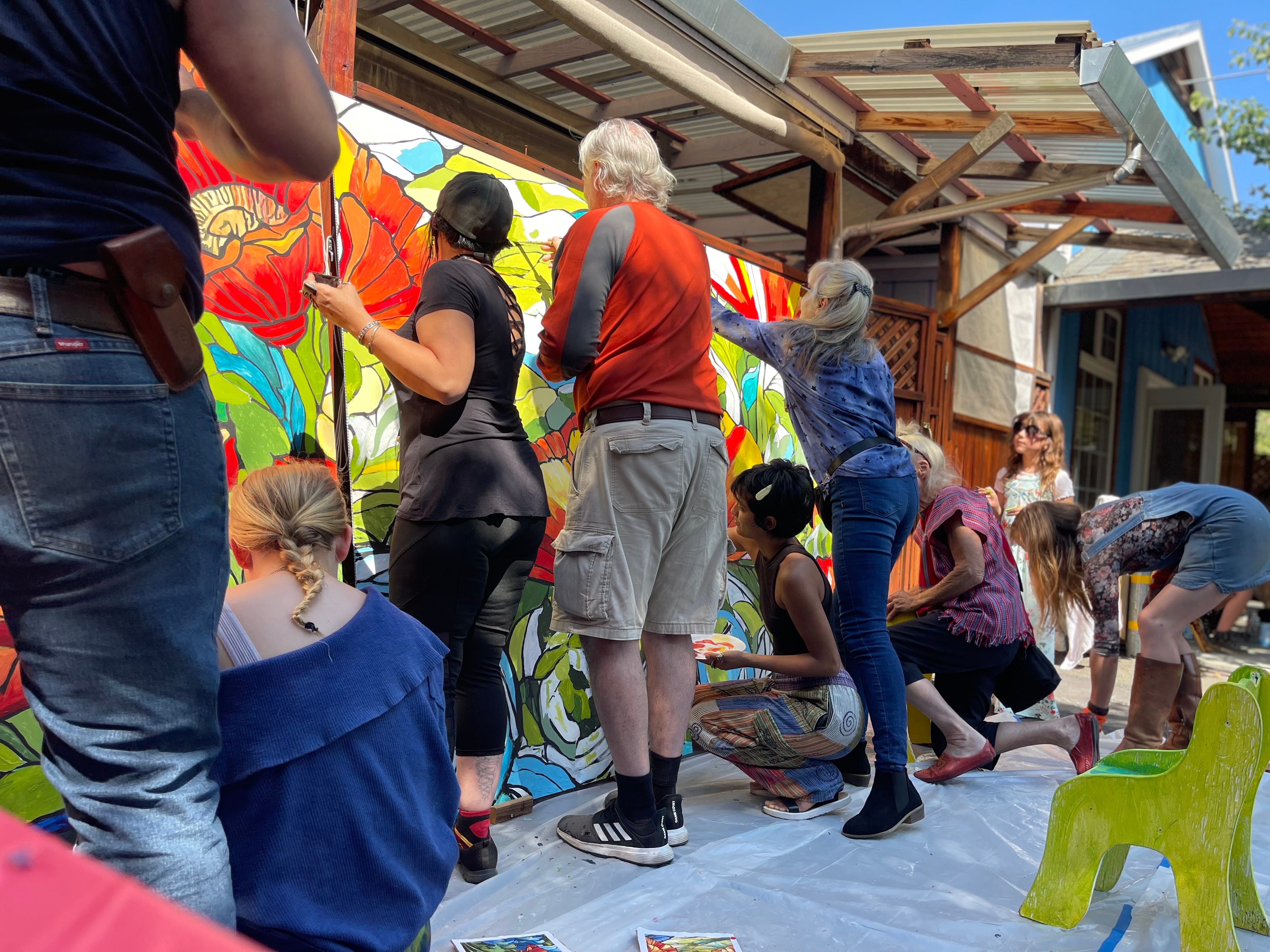
And, of course, the poppies did what they always do. They opened people up.
Somewhere in that colorful chaos, my perspective shifted. I stopped seeing it as a mural and started understanding it as a record. A record of everyone who touched it. Their talent, their care, their chaos, their joy. Their lives. Their stories.
My job turned out to be pretty simple: set up the panels, keep the paint mixed, make people feel welcome, offer encouragement, and then get out of the way…
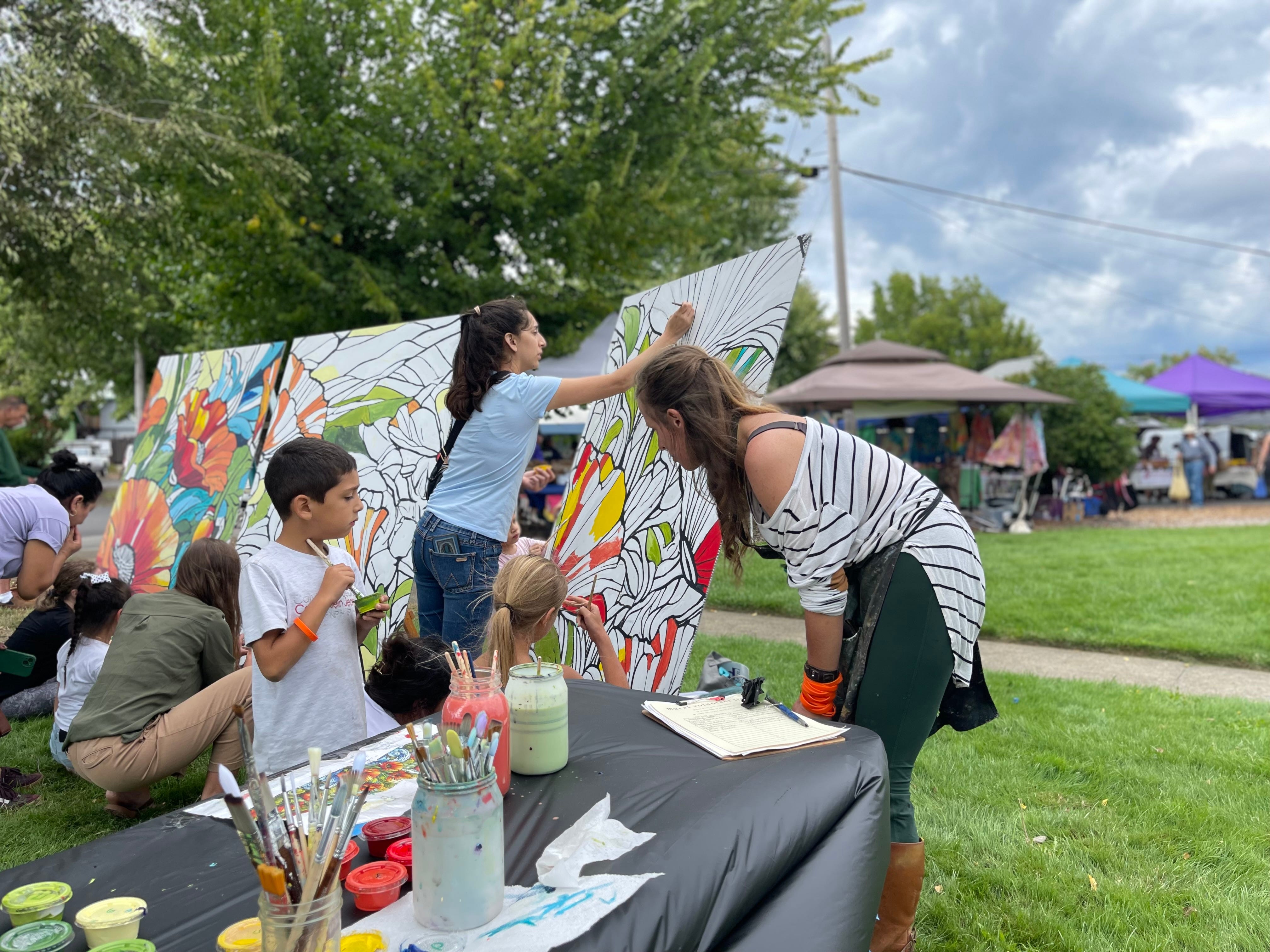
…..okay—so maybe there was a tiny bit more to it than that.
The Part That No One Saw
After the community painting days were over, the quiet work began: cleaning up edges, deepening the color, coaxing harmony out of chaos. This is when I got to really be with the piece, to polish what the collective had poured in.
I set the panels up under our long covered porch in the woods, in that almost-perfect late September weather—warm enough for bare feet, but cool enough to drink coffee all day.
And I realized that the community painting days weren’t over. Not really.
My mom and my best friend drove up from Southern California, women I hadn’t truly shared time with in years. We sprawled out with brushes and palettes of paint, having easy, slow conversations while we sharpened lines, pushed shadows deeper, and encouraged the poppies to glow.
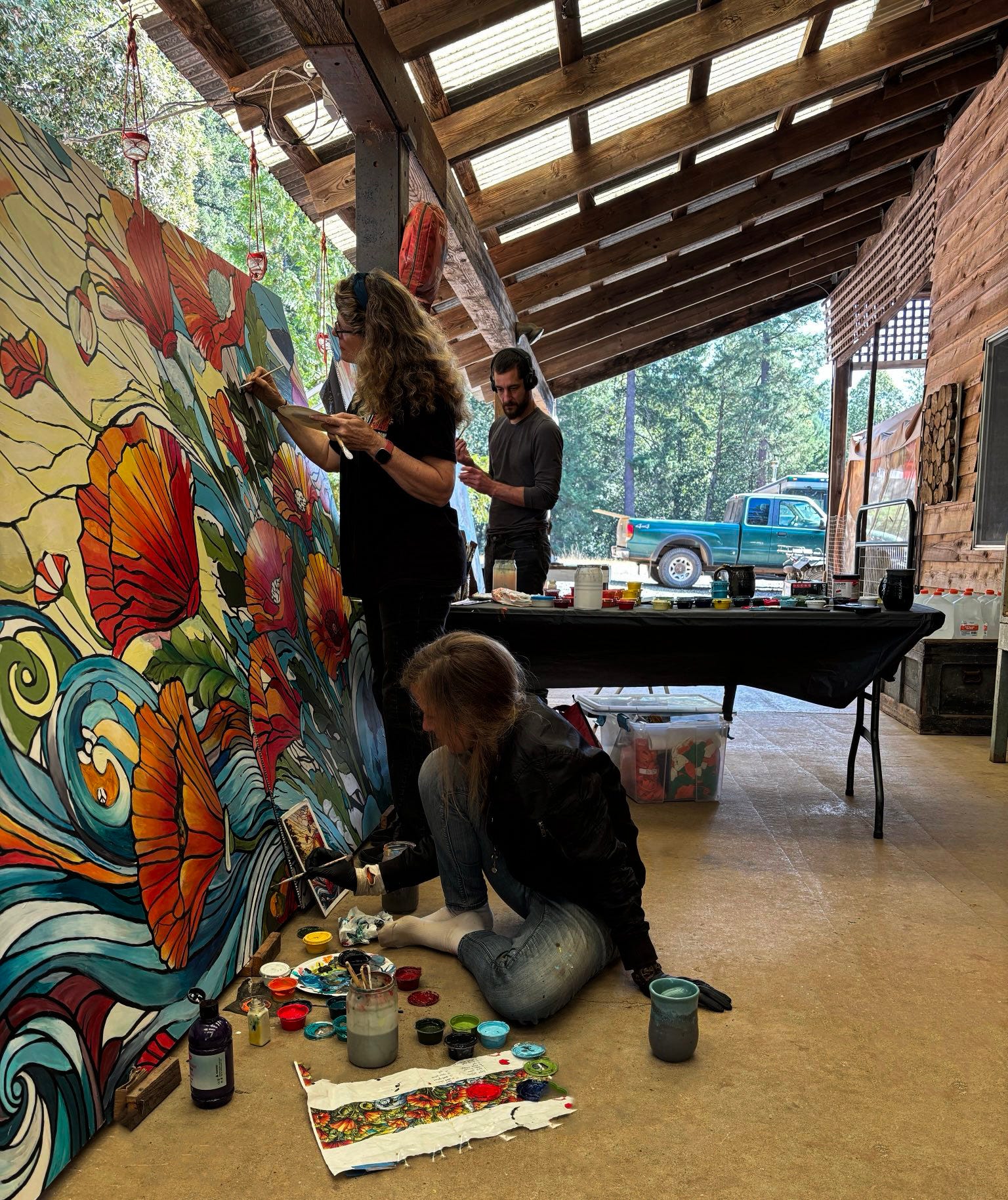
Neighbors dropped by, and I demanded their participation.
Even my husband joined in, confirming what I already suspected: he’s annoyingly good at painting, despite never having done it before. (A fact that surprises exactly NO ONE who knows him.)
Those days felt like the whole project was exhaling. The chaos of the public events settling into a quieter kind of making: just us, the trees, the panels, and this strange, vibrant thing that was shaping us as we were shaping it.
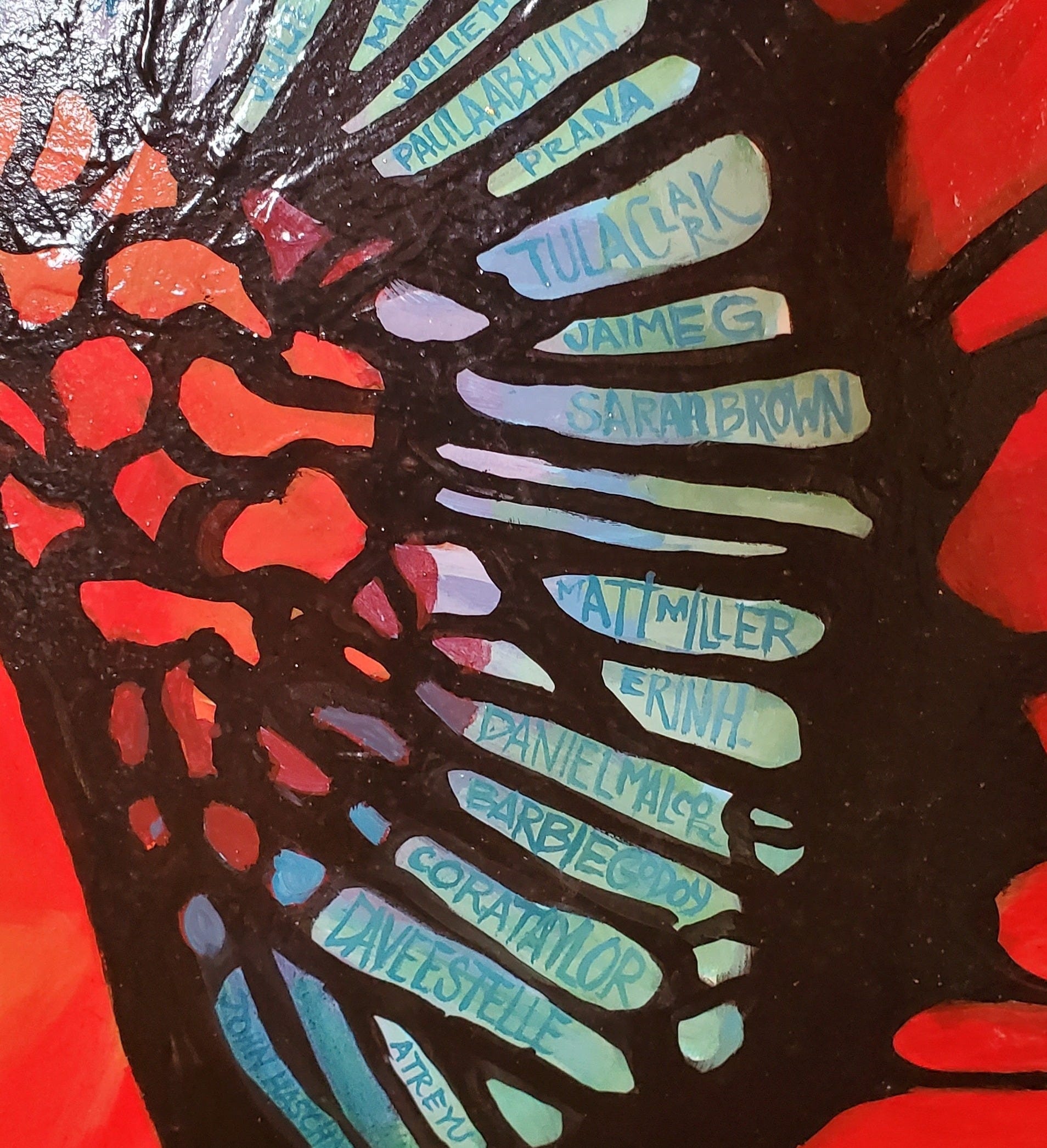
When the mural finally felt whole, I added the final layer, a collective signature: the names of everyone who had shown up to paint, tucked between petals and stems.
When I stepped back from it, what stayed with me wasn’t the finished image.
It was what emerged between people while their hands were busy “just” coloring in.
That’s what I keep circling back to.
Sure, I care about color and composition and making something you can really lay your eyes on. Of course I do. But underneath that, I want to create places where people can see themselves and each other more clearly. Places where the veil between “I” and “everyone else” thins out a little. Places that remind us how much we have in common when our hands are in the same mess, making something beautiful together.
After the Paint Dried
When I drive past the mural now, I don’t really see a mural.
Instead, I see the painfully shy boy who, when I put a brush in his hand, forgot himself and blossomed. I see the father lying in the grass, beaming with pride as his three-year-old daughter—with perfect concentration—filled in one shape after another. I see the people I met for the first time as perfect strangers, who now wave to me when we pass each other in town. I see proof that my town—and yes, every town—is covertly full of makers and dreamers and caretakers, hungry for opportunities to create and connect.
The mural will fade eventually. Sun and rain and time will do what they always do, despite how I encased the flowers in a fortress of sealants. But for now, it’s there, in Recreation Grove: a snapshot of a moment when almost two hundred people gave in and said: Okay, sure. I’ll add my color.
If you were one of them: thank you. (Now, go look for your name.😉 And check out Jenn Procacci’s gorgeous mural next to mine—you can’t miss it.)
If you’ve only seen the mural from across the street (or across the globe): this is a small glimpse of what went into it. Maybe you can be part of the next one.
More and more, I want all my creations (and hell, my whole life) to feel the way those panels did for those five days—wild, precious, alive. What I love, maybe more than anything, is making things that other people get to touch—with their hands, their stories, and their lives.
The mural was one big, public experiment in that direction.
This newsletter, blinking awake after five months of silence, might be the next. Just maybe.
Special thanks to: the City Of Willits, Artefex, Seabiscuit Therapeutic Riding Center, the Community Of Ridgewood Ranch, Redwood Children’s Services, Inner Earth Tea House, Willits Farmer’s Market, Willits Weekly, Willits Rotary Club, Connor Stack, Walter Kolon, Sarah Brown, Meredith, Erin Holzhauer, Diane Camaros, Bruce Burton, Roger Howard, Barbie Godoy, Cora Taylor, Daniel Malcor, Matt Miller, Jenn Procacci, Mathew Caine, Mike Foley, and the hundreds of people who gave this project life.
You’re incredible
What a beautiful effort - and mural! I love your writing and how you captured the meaningfulness of this project. Also, 3 cheers for Willits!!!